

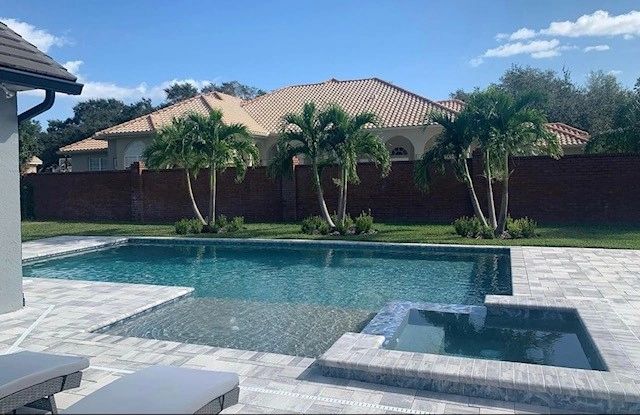
It's one of the most common calls we get: we love our pool, but we'd really like a spa. The backyard was built twenty years ago, the family has changed, and an evening soak in 102-degree water — with the pool glowing a few feet away — is suddenly the thing missing. The good news is that it's almost always possible. The question is which kind of spa, and how it ties into what's already there.
Three ways to add a spa
1. Attached spa with spillover
This is the classic. The spa is built adjacent to the pool, sharing a common wall. The spa sits slightly elevated, and its edge spills into the pool when the jets turn off. Visually, it's the tightest integration — the pool and spa read as one water feature. Equipment-wise, the two share filtration and heating on a shared pad.
This is the right answer when you want the spa to feel like it was always there. It's the most involved option structurally — we're cutting into the existing bond beam, re-engineering the shell in that area, and re-tiling the waterline so the transition looks intentional — but the result is the one that holds up.
2. Freestanding in-ground spa
A separate in-ground spa, built a few feet away from the pool with its own equipment. Shorter project. Less structural work on the existing pool. You lose the spillover, but gain flexibility — you can place the spa wherever it works best for the deck and the house.
This is often the right answer when the existing pool is in great shape and you'd rather not reopen it. It's also typically faster — two to three weeks of on-site work, depending on site access.
3. Raised attached spa with tiled face
A variant of the attached spillover spa, but elevated 12–18 inches above the pool surface with a tiled vertical face. The spillover cascades down that face into the pool. It becomes a centerpiece — a water wall on the water wall. This is the option we draw most often for modern, design-forward backyards.
The spa is a decision about how the backyard reads, not just where to sit.
Equipment realities
Here's what gets missed in the first conversation: a spa is not just a small pool. It's a completely different thermal system. Heating 8–10 feet of water to 102°F requires a real heater — gas or a heat pump with enough capacity. Circulation needs to be fast. Insulation of the shell matters. The jets and blower run on their own plumbing lines.
Before committing to the spa location, we check:
- Heater capacity. Existing pool heaters are almost always undersized for adding a spa. Usually we're specifying a new or upgraded heater as part of the project.
- Gas line (if gas-heated). Running a new gas line is sometimes the largest single cost item. Heat pumps avoid this but take longer to heat the water.
- Electrical capacity. Jet pumps and blowers add real load to the equipment pad. A sub-panel upgrade is common.
- Automation. Spa-only schedules, temperature pre-heating from your phone, light scenes — all of this belongs in the same system as your pool.
Where the cost actually goes
For an attached spillover spa, the material cost of the spa shell itself is only a portion of the project. The rest is in the things that don't show up in a proposal headline: re-plumbing the pool, upgrading the equipment pad, electrical, gas, re-tiling the shared waterline, rebuilding the coping across both pool and spa, and the deck patching to match.
A proposal that only prices the spa — without addressing all of that — is a proposal for a disappointing outcome. Read what's included carefully.
What a good spa addition looks like finished
The test is simple: if you showed someone a photo of the backyard and told them the spa had been there since day one, they'd believe you. The tile matches. The coping runs continuously. The spillover edge is the exact right height. The raised wall is clad, not painted. The lighting changes from pool to spa on a schedule. The system works as one.
Anything less is a spa bolted onto a pool — not a backyard with both.
Considering a spa for your existing pool? Send us a few photos of the pool as it is today. We'll sketch a concept and a scope. Start the conversation →